By Digital Media USA
For many small businesses, local Facebook groups look tempting. Thousands of members. Constant activity. A steady stream of posts. On the surface, it feels like the modern town square—cheap, easy, and “where everyone is.”
But here’s the uncomfortable truth: advertising your business in Facebook groups is often a bad idea—and in many cases, actively harmful.
This isn’t theory. It’s lived experience across countless local markets.
Groups Don’t Protect Businesses — They Feed on Them
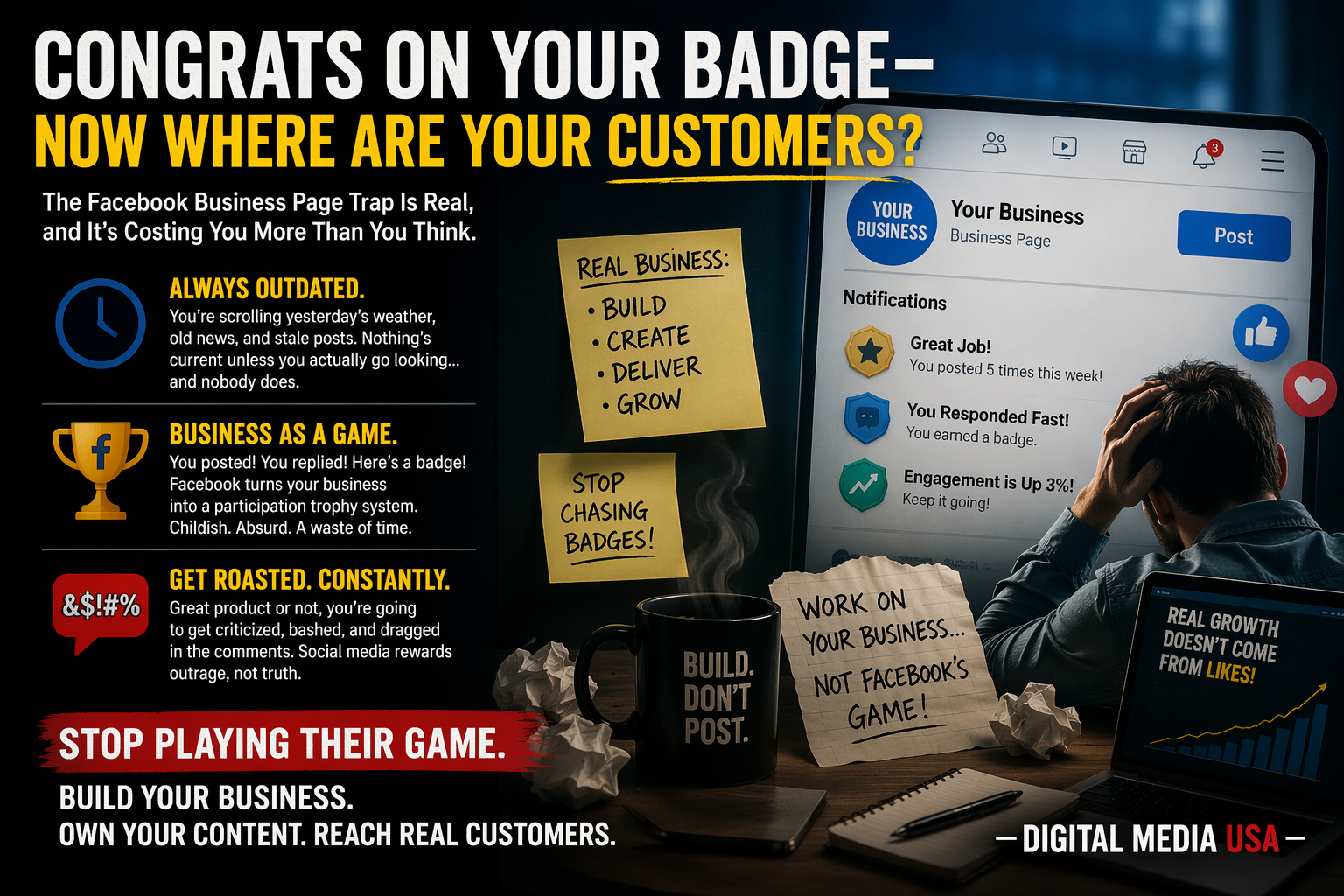
Facebook groups are not designed for commerce. They’re designed for engagement, and Facebook defines engagement as reactions, arguments, and controversy—not professionalism.
When a business posts an ad in a group, it doesn’t get treated like an ad. It gets treated like bait.
- Anyone can comment
- Anyone can pile on
- Anyone can joke, insult, speculate, or accuse
- And all of it stays attached to your brand
You’re not buying advertising space.
You’re volunteering for a public comment section with no moderation standards.
The “Stupid Commentary” Problem
Local groups are infamous for a reason. Business posts routinely attract:
- Armchair experts
- Grudge-holders
- Former customers with exaggerated complaints
- People who have never used your service but “heard something once”
- Trolls looking for attention
None of these people would ever walk into your store and shout these things out loud. But in a Facebook group, they feel empowered to do exactly that.
Worse: their comments often get more visibility than your original post.
So your paid promotion turns into a free-for-all that can:
- Damage your reputation
- Scare off potential customers
- Permanently associate your brand with negativity in search results and screenshots
You Don’t Control the Space — or the Outcome
When you advertise in a group:
- You don’t control the comments
- You don’t control who sees it
- You don’t control how long it stays up
- You don’t control whether the admin deletes it mid-discussion
- You don’t control whether the admin screenshots it for laughs
And if things go sideways?
You can’t turn comments off.
You can’t edit the narrative.
You can’t fix first impressions.
That’s not advertising. That’s exposure roulette.
Groups Are Not Media Properties
This is the part most businesses don’t realize.
Facebook groups:
- Are not indexed by Google
- Have no SEO value
- Have no archive value
- Have no ownership value
- Can disappear overnight
Your money doesn’t build anything. It doesn’t compound. It doesn’t last.
You’re paying to shout into a room you don’t own, on a platform that benefits from chaos, not clarity.
Why Professional Media Beats Group “Exposure”
Compare that to advertising on an actual digital media platform:
- Your message is controlled
- Your brand appears in a professional context
- There’s no open comment mob attached
- The content lives on
- It’s searchable
- It builds credibility instead of tearing it down
This is why serious businesses advertise on websites, not groups.
Websites are assets.
Groups are distractions.
The Hidden Cost: Brand Damage
The biggest risk isn’t wasted money.
It’s brand erosion.
One ugly comment thread in a popular local group can:
- Live forever in screenshots
- Be reposted elsewhere
- Show up when someone Googles your business
- Undo months or years of reputation-building
All for what? A few likes and a temporary spike in visibility?
The Bottom Line
Advertising in Facebook groups is often:
- Short-term
- Uncontrolled
- Unprofessional
- And quietly destructive
If you value your brand, your reputation, and your long-term growth, the smarter move is clear:
Invest in real digital media.
Own your narrative.
Control your message.
Because in the end, visibility without control isn’t marketing—it’s risk.
Digital Media USA covers the evolving digital landscape, local media economics, and the difference between noise and value in the modern attention economy.