– Watertown New York By Hans Wilder
For decades, Americans worried about Cuba launching trouble from 90 miles south of Florida.
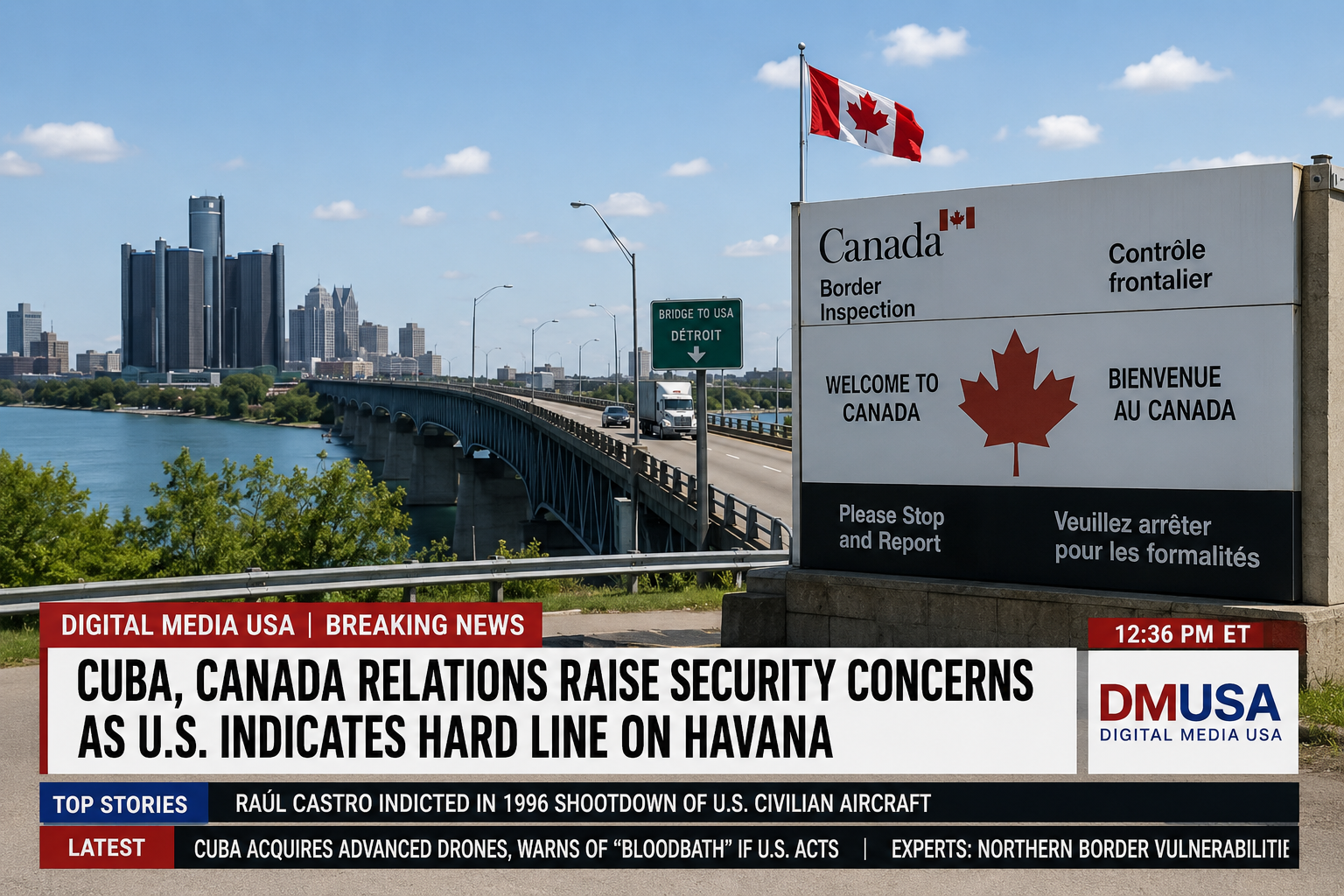
Now in 2026, after the indictment of Raúl Castro over the 1996 shootdown of American civilian aircraft, growing Iranian drone chatter, and Havana openly threatening a “bloodbath” if the United States takes military action, some Americans are looking north and asking a question nobody used to ask:
“What exactly is going on with Canada?”
Yes. Canada.
Land of hockey, apologies, suspiciously aggressive geese, and apparently an immigration system so loose lately you could probably cross the border dressed as a Venezuelan circus magician carrying a sack of fireworks and three expired passports.
And before the Canadian Ministry of Feelings sends out a nationwide emergency counseling alert, let’s be clear: nobody is claiming Ottawa is secretly building Cuban missile silos behind a Tim Hortons in Ontario.
But Americans are beginning to notice something uncomfortable.
Canada has maintained warm relations with Cuba for decades while the United States spent generations treating Havana like the geopolitical equivalent of a rattlesnake in the garage. While Americans embargoed Cuba, Canada kept the tourism flowing, the diplomacy flowing, and probably sold enough sunscreen to Havana to finance half the Caribbean.
Meanwhile, the United States has spent the last several years watching a northern border that suddenly feels a whole lot less “quiet and sleepy” than Americans were promised.
Americans Notice Geography Real Fast During Dangerous Times
Detroit sits right next to Canada.
Seattle sits near Canada.
Fort Drum, one of the most strategically important military installations in the northeastern United States, sits within striking proximity of major cross-border corridors.
And suddenly people are noticing that America’s giant upstairs neighbor has been acting less like a rugged ally and more like the assistant manager at an international airport who’s afraid to tell anybody “no.”
Again, nobody serious believes Canadian tanks are going to roll into Michigan blasting Cuban music while Prime Minister whoever-he-is-this-week waves from a maple syrup armored personnel carrier.
That’s not the concern.
The concern is modern warfare.
Drones.
Cyberattacks.
Sabotage.
Sleeper networks.
Infrastructure disruption.
The kind of twenty-first-century chaos that doesn’t require armies crossing borders anymore.
And if recent years taught Americans anything, it’s that governments around the world have become shockingly bad at knowing exactly who is entering their countries, where they came from, or what their intentions are.
But don’t worry. Somewhere in Ottawa there’s probably already a government-funded task force preparing a 900-page report explaining why asking questions is the real threat.
The Raúl Castro Indictment Changed the Mood
This week’s indictment of Raúl Castro over the Brothers to the Rescue shootdown reopened a wound Americans never forgot. Four men died when Cuban fighter jets blasted civilian aircraft out of the sky in 1996. Three were Americans.
Now, with reports of Cuban military cooperation involving Russian and Iranian hardware, plus threats of retaliation against the United States, Americans are once again looking at Cuba not as a vintage Cold War museum piece — but as a live geopolitical problem.
And when Americans feel threatened, they start looking at maps.
Which is bad news for Canada because the map says one thing very clearly:
You’re right there.
Canada’s Biggest Defense Plan May Be “America Exists”
To be fair, Canada has long relied on the fact that the United States military exists between it and basically every major threat on Earth.
That arrangement worked wonderfully for decades.
America spent trillions on defense.
Canada spent trillions on diversity consultants, climate seminars, and emotionally supportive bike lanes.
But now the world is getting uglier again.
Russia is aggressive.
Iran is aggressive.
China is aggressive.
Cuba is rattling sabers again.
And suddenly Americans are wondering whether the northern border still operates under serious Cold War-era security assumptions — or whether it has become one giant international shrug emoji.
Most Likely Outcome? Cuba Throws Castro Under the Bus
Ironically, the most probable outcome here is not war.
It’s survival.
Cuba’s economy is collapsing. Blackouts, shortages, unrest, and desperation are eating the island alive. And Havana knows full well that directly provoking the United States would end about as well as trying to fistfight a bulldozer.
Which is why the smarter move for Cuba may be abandoning the old revolutionary dinosaur politics entirely.
Don’t be shocked if someday soon Havana quietly distances itself from the Castro legacy, offers up scapegoats, cuts deals, opens business channels, and suddenly starts talking about a “new era of cooperation.”
Because history has a funny way of turning blood enemies into trading partners once everybody runs out of money.
And frankly, if Cuba ever fully normalized, half the Canadian political class would probably move there immediately so they could lecture American tourists about carbon footprints while sipping mojitos on a beach Americans liberated twice by accident.