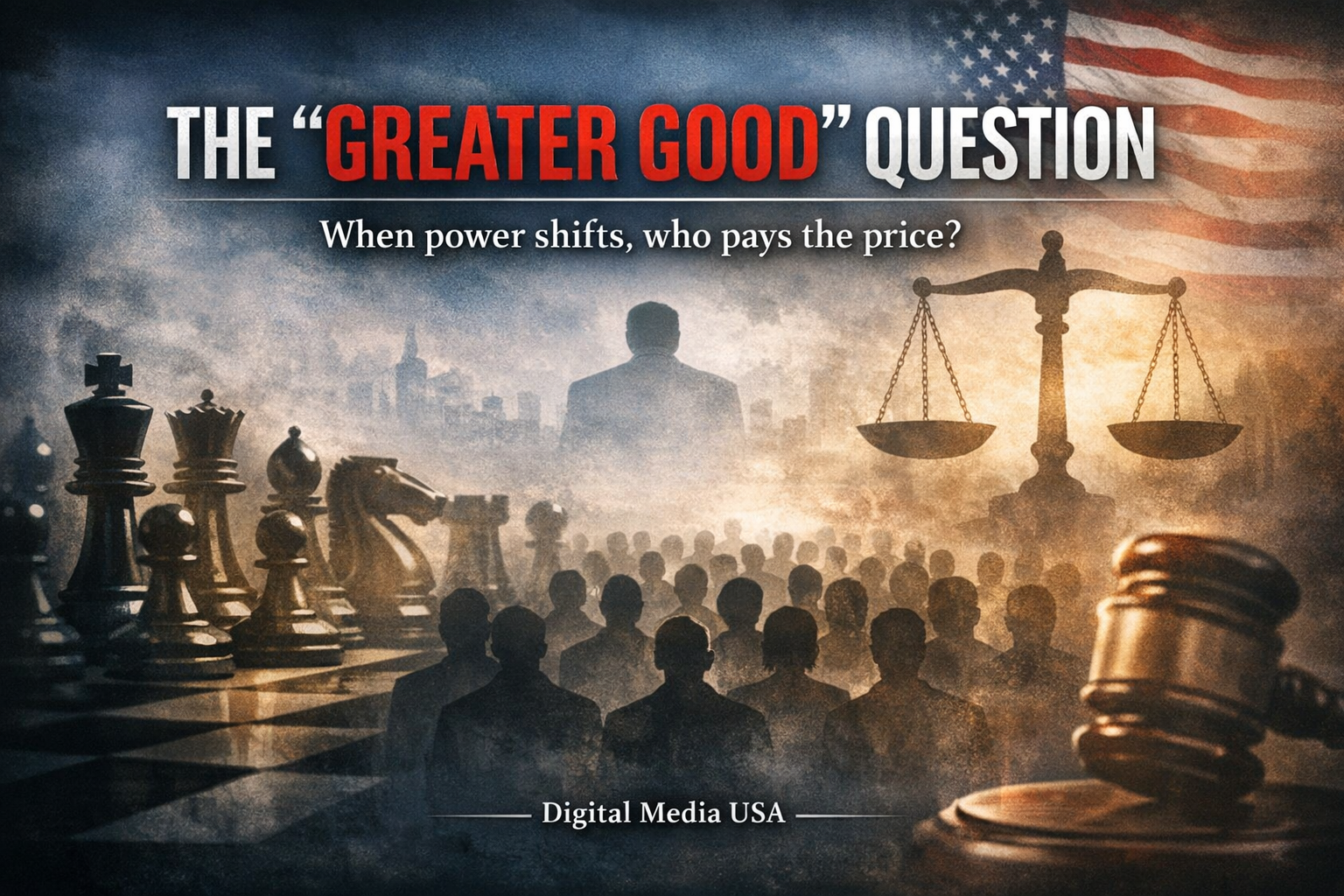
A viral clip circulating online—amplified by Alex Jones—raises a familiar but uncomfortable question: what happens when leadership shifts from bold individualism to decisions framed around the “greater good”? The argument being pushed is simple—some supporters believe Donald Trump is evolving, recalibrating priorities in a way that feels less like disruption and more like management.
Whether that’s a strategic pivot or a betrayal depends entirely on where you’re standing. For some, it’s proof of maturity in a complex global environment. For others, it signals the dilution of the outsider energy that fueled a political movement in the first place.
The real story isn’t the clip—it’s the reaction. In the age of instant amplification, perception can shift faster than policy. And once the phrase “greater good” enters the conversation, it tends to mean one thing: someone, somewhere, is being asked to accept less in the name of something bigger.
That debate isn’t going away. It’s just getting started.