By Digital Media USA — Serious Analysis, Mildly Sarcastic
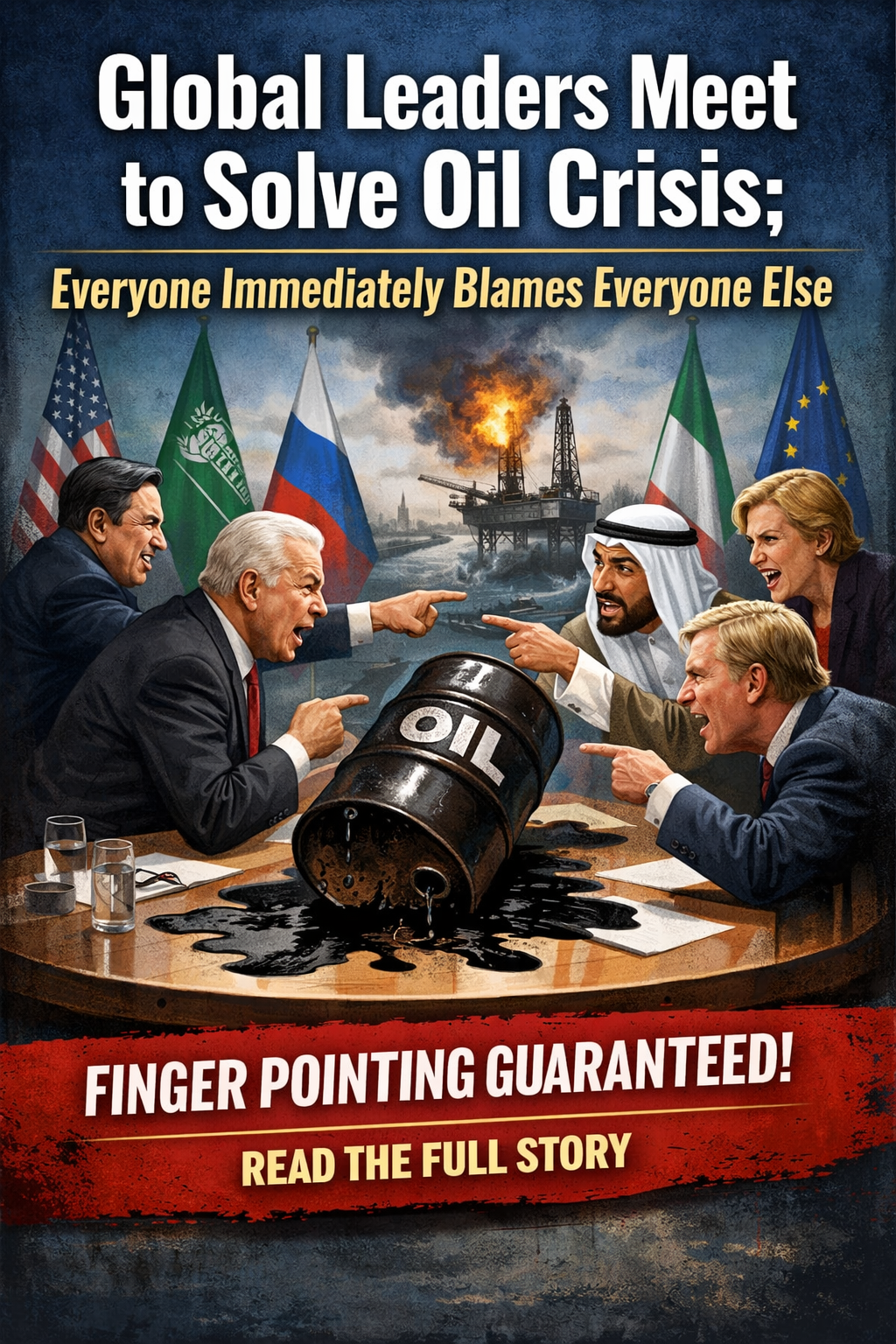
Somewhere in a large conference hall filled with translators, security guards, and an impressive amount of bottled water, the world’s leaders gathered this week for an urgent meeting to solve the latest global oil crisis.
Within minutes, they accomplished something remarkable.
They blamed each other.
The emergency summit, billed as a serious attempt to stabilize global energy markets, quickly turned into what observers described as “the geopolitical version of a family argument at Thanksgiving.”
One delegation blamed sanctions.
Another blamed wars.
A third blamed “market manipulation.”
A fourth blamed climate policy.
And at least one representative appeared to blame the weather.
By the end of the first hour, the only thing everyone agreed on was that it was definitely someone else’s fault.
Energy analysts say the current spike in oil prices is the result of multiple factors: geopolitical tensions in the Middle East, shipping disruptions, strategic production cuts, and a global market that tends to react faster than governments can hold press conferences.
But at the summit itself, the discussion reportedly focused less on solutions and more on carefully crafted statements designed to make sure no one’s domestic voters blamed them.
One European official reportedly summarized the meeting perfectly during a hallway conversation:
“If we can’t fix the oil market, we can at least fix the headlines.”
Meanwhile, Americans watching from home might notice something interesting about the current moment.
Just a few years ago, voters were told that presidents had no control over energy prices. Oil markets were complicated. Global forces were mysterious. No single leader could possibly influence the price at the pump.
Now suddenly, every fluctuation in oil prices is apparently proof that someone in power somewhere is personally responsible.
Funny how that works.
The reality is that energy policy, supply chains, geopolitics, and global production decisions all play a role in oil prices. It’s a massive system involving dozens of nations, private companies, and financial markets.
But complexity rarely makes good political messaging.
So instead, the world gathered in a room and did what humans have done for thousands of years when confronted with a complicated problem:
Point fingers.
Meanwhile, in the background of all this diplomatic theater, a different conversation has been quietly growing in the United States — one centered around energy independence, domestic production, and the possibility of a new American Golden Age built on strong industry, strong infrastructure, and a refusal to depend on unstable global supply chains.
That idea, once dismissed by many international elites as unrealistic, suddenly looks a lot more attractive when global leaders can’t even agree on who’s responsible for the crisis they’re trying to solve.
The summit ended with a joint statement promising “continued dialogue,” which in diplomatic language generally means:
“We’ll meet again later and blame each other some more.”
Until then, the oil market will continue doing what it has always done — moving faster than politics.
And somewhere in the world tonight, another emergency meeting is probably already being scheduled.
Because nothing solves a global energy crisis quite like another conference table.