-Watertown NY By Joel Pilon
The Disappearing Strains: What Legalization Changed About Cannabis—and What It Cost Us
For years, many of us lived under a contradiction: cannabis was illegal, yet widely used; condemned publicly, yet relied on privately. Good men lost jobs, promotions, and opportunities not because they were irresponsible or impaired at work, but because they used a plant—often off the clock, in their own homes, to relax or manage pain. The punishment never matched the reality. And for those of us who used it responsibly, daily even, it never stopped us from functioning, working hard, or showing up for our families.
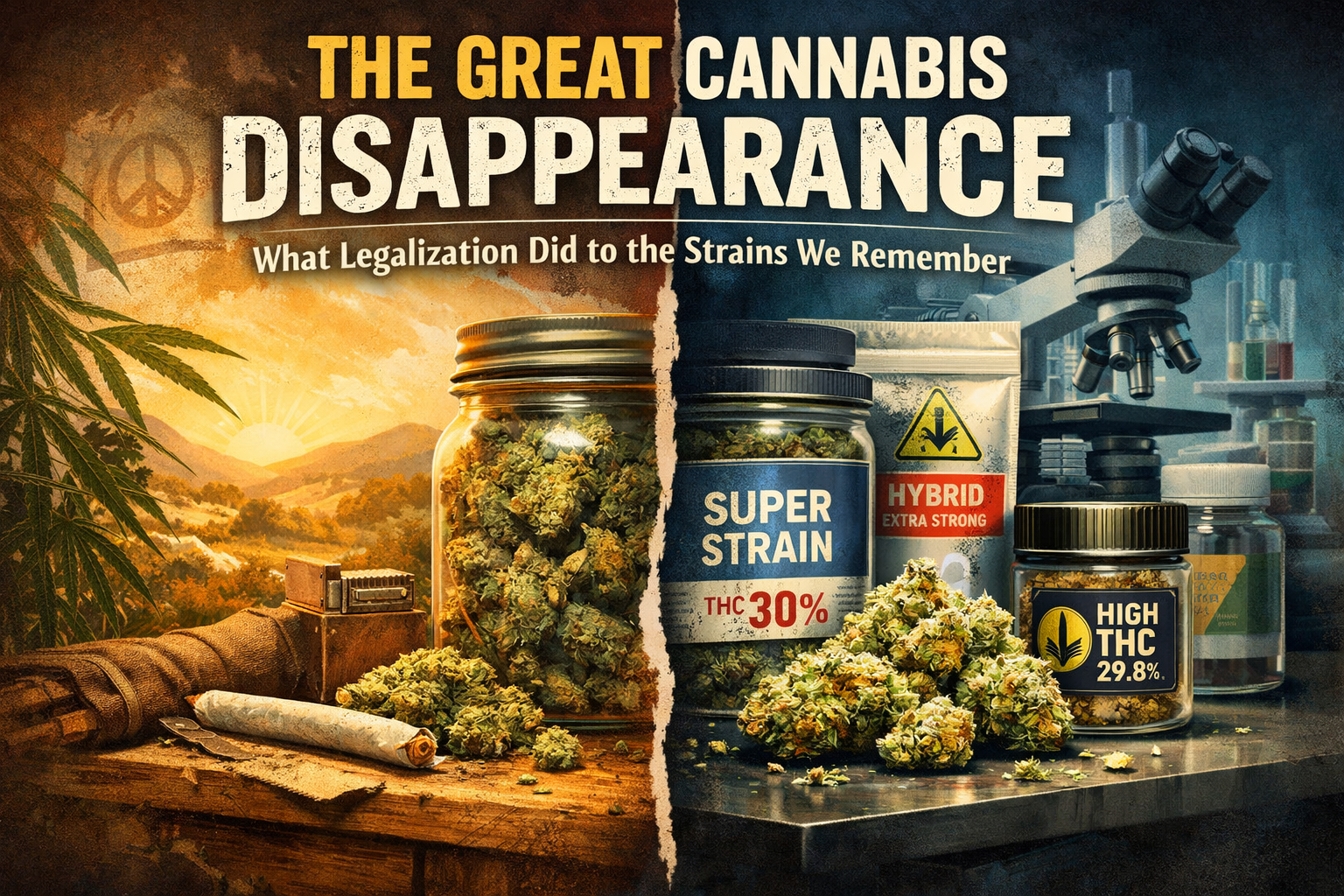
Now that cannabis is legal in much of the country, a new contradiction has emerged. The plant we fought so long to normalize doesn’t quite resemble the one we grew up with. The older strains—the ones with familiar aromas, gentler highs, and predictable effects—seem to have vanished. In their place are “hybrids,” “super strains,” and THC levels that sound more like lab metrics than something grown in soil.
It raises a fair question: Did legalization change cannabis, or did the industry simply replace what came before?
🌱 How the Old Strains Got Pushed Aside
The disappearance of classic strains isn’t a mystery—it’s the result of several forces that collided once cannabis entered the legal marketplace.
Potency became the selling point. Dispensaries learned quickly that customers gravitated toward the highest THC numbers on the label. Growers responded by breeding plants that tested stronger and stronger.
Selective breeding accelerated. Even before legalization, underground growers were crossing plants to boost potency. Legalization simply brought that process into the open and sped it up.
Testing requirements changed the game. Labs became gatekeepers. Strains that tested low—even if they offered a smoother, more balanced experience—were pushed aside because they didn’t sell as well.
Heritage genetics were neglected. Many older strains were “landraces”—stable, naturally occurring varieties. As hybrids took over, those original genetics were lost, overshadowed, or simply abandoned.
None of this required genetic modification in the lab. It was more like the natural evolution of a commercial industry: whatever sells becomes the standard.
🔬 Has the Plant Been Altered? Yes—but Mostly Through Breeding, Not Engineering
There’s a big difference between genetically modified and selectively bred. Most legal cannabis today isn’t engineered in a lab. Instead, it’s been bred like dogs, tomatoes, or racehorses—generation after generation of crossing plants with desirable traits.
The result is unmistakable:
Higher THC
Lower CBD
More intense effects
Less of the mellow, functional high older smokers remember
So when people say, “Weed today is stronger,” they’re right. But it’s not because universities secretly rewrote the plant’s DNA. It’s because the market rewarded growers who could push potency to the limit.
🔥 What We Lost Along the Way
For longtime users—especially those who used cannabis to manage pain or simply unwind—something important disappeared.
The balanced high that didn’t knock you sideways
The classic strains that defined whole eras
The predictability of effects
The connection to the plant’s natural roots
Legalization brought safety, regulation, and freedom. But it also brought commercialization, and commercialization tends to flatten diversity. The cannabis of today is stronger, flashier, and more marketable—but not necessarily better.
🌄 What Comes Next
There’s a growing movement to revive “heritage strains”—the cannabis equivalent of heirloom vegetables. Small growers and genetic preservationists are hunting down old seeds, restoring lost lines, and offering alternatives to the high-THC arms race.
If legalization’s first chapter was about potency, the next chapter might be about variety, balance, and rediscovery.
And maybe, in that rediscovery, we’ll find our way back to the strains that shaped generations—before the labs, before the marketing, before the numbers on the label mattered more than the experience itself.