By Digital Media USA
Somewhere between upload and playback, something strange is happening.
Creators—especially the kind who actually remember what they made—are starting to notice a subtle but unsettling shift. A video goes up one way, clean and intentional, every frame placed where it belongs. Then it comes back down the pipeline through YouTube’s player… and something’s off. Not broken. Not obviously corrupted. Just different.
Not compression different.
Not bitrate different.
Interpretation different.
And in 2026, that’s a line worth paying attention to.
The New Middleman: AI With Opinions
For most of YouTube’s existence, the deal was straightforward: you upload, they encode, people watch. Sure, the platform crushed your file a bit—nobody loved what it did to shadows or cymbals—but it was still recognizably yours. A little bruised, maybe, but intact.
Now? There’s a growing sense that YouTube isn’t just compressing anymore—it’s processing with intent.
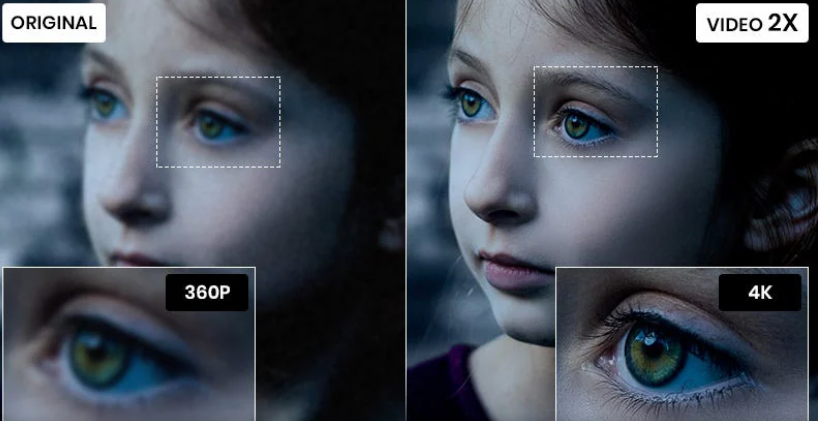
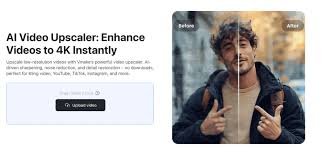
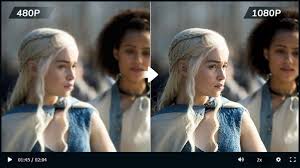
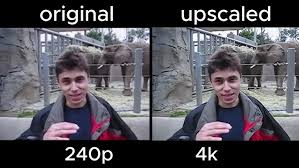
AI upscaling. Audio normalization that goes beyond leveling. Frame interpolation. “Enhancements” designed to make everything cleaner, sharper, more “engaging.” It all sounds harmless until you realize what that actually means: your work is being run through a system that has its own idea of what your work should be.
And sometimes, it disagrees with you.
Derivative Works—or Just Replacements With Better PR?
Buried in YouTube’s terms of service is a phrase that used to read like legal wallpaper:
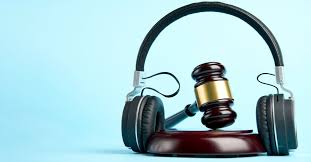
“prepare derivative works”
In the pre-AI era, that meant trailers, thumbnails, maybe a promotional clip. Nothing that touched the original upload in any meaningful way.
But in a world where AI can rewrite tone, pacing, clarity—even emotional cadence—the definition of “derivative” starts to stretch.
Because here’s the uncomfortable question no one at YouTube seems eager to answer:
If the platform modifies your video and shows that version to your audience under your name… is that still a derivative—or is it the new original?
The Sound of Something Not Quite Right
Ask enough creators and you’ll hear the same refrain: “It’s subtle, but it’s not what I uploaded.”
Maybe it’s the way the audio sits—too polished, too flattened. Maybe it’s motion that feels just a little too smooth, like the system decided your editing rhythm needed help. Maybe it’s a visual sharpness that crosses the line into artificial.
Individually, these changes can be explained away. Together, they start to feel like a pattern.
And for creators who obsess over details—the exact timing of a cut, the texture of a sound, the grit in a frame—that pattern isn’t just noticeable.
It’s invasive.
Why This Is Happening (Hint: It’s Not About Art)
YouTube isn’t doing this because it suddenly developed a taste for auteur filmmaking.
It’s doing it because:
- Consistency scales better than individuality. AI systems prefer predictable inputs and outputs. Your unique quirks? Not efficient.
- Engagement is king. If an algorithm believes a slightly altered version of your video keeps people watching longer, it’s going to favor that version every time.
- Data is everything. Every upload is training material. Every “enhancement” is another layer of insight into how content performs when tweaked.
In other words, your video isn’t just a video anymore.
It’s a dataset with a face.
The Reputation Gap
Here’s where it gets personal.
If your content starts to feel different—slicker, flatter, less you—your audience doesn’t blame YouTube. They don’t see the pipeline. They see your name.
So when something feels off, the assumption is simple:
The creator changed.
But what if the creator didn’t?
What if the platform did?
The Illusion of Control
For years, YouTube sold creators on a simple promise: a place to publish, an audience to reach, tools to grow. And for a long time, that was true.
But the rise of AI has complicated that relationship.
Because once a platform can:
- Enhance your work
- Adjust your work
- Potentially reinterpret your work
…it’s no longer just a platform.
It’s a participant.
And participants, by definition, have influence.
Where This Leaves Creators
Right now, there’s no smoking gun. No official announcement that YouTube is rewriting content at scale. Just a growing chorus of creators raising an eyebrow and saying, “This doesn’t feel like mine.”
Maybe it’s nothing.
Maybe it’s everything.
What’s clear is this: the line between hosting and handling is getting thinner.
And in an era where AI can quietly reshape what we see and hear, that line might be the only thing separating your work from… something adjacent to it.
Final Cut
There was a time when uploading a video meant locking it in place—a digital artifact, preserved as you made it.
Now, it feels more like sending your work into a system that might send it back… improved.
Or interpreted.
Or optimized.
Or just slightly, inexplicably different.
And the real question isn’t whether YouTube can do that.
It’s whether, somewhere along the way, we already agreed to let it.