Digital Media USA Editorial
By Joel Pilon
Northern New York weather has always had a personality disorder, especially along Lake Ontario. One day it thinks it is February, the next day it is auditioning for June. But this year, the swings have felt especially sharp — and my silver maple trees seem to be losing their minds over it.
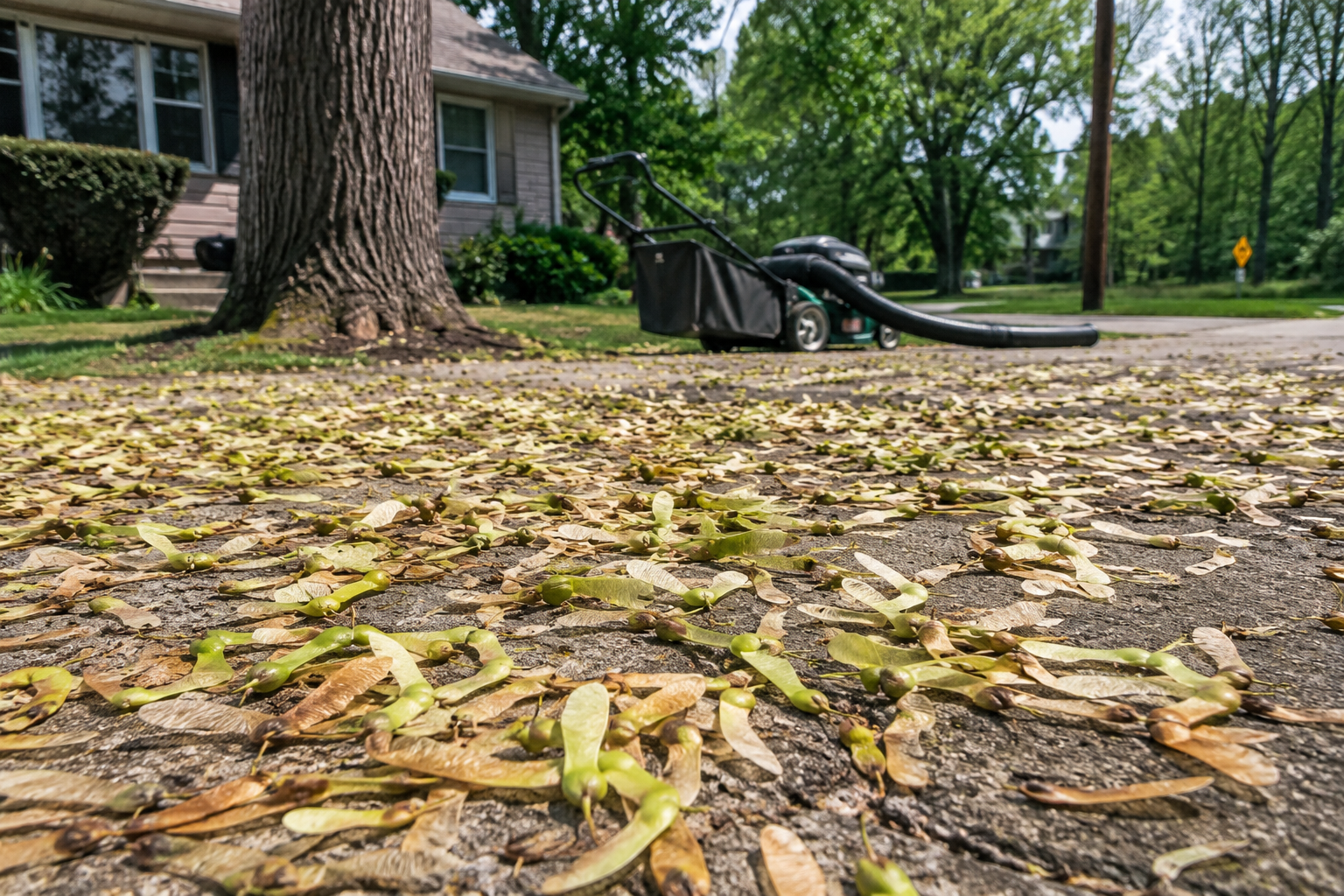
I have lived along Lake Ontario for years, and I cannot remember seeing my silver maples behave quite like this. They have been dropping those little “helicopter” seed pods over and over again, coating the driveway, deck, lawn, and everything else within range. It is not a light sprinkle. It is a full aerial assault.
Every time the weather flips — cold, warm, cold again, then suddenly seventy degrees — the trees appear to respond with another round of shedding. It is as if they cannot decide what season they are in. Spring? Summer? Fall? Apparently the answer is yes.
For anyone with silver maples nearby, you know the routine. The helicopters spin down by the thousands, pile up in corners, clog gutters, stick to walkways, and turn yard cleanup into a daily chore. I am out there constantly with the blower trying to stay ahead of it, but this year it feels like a losing battle. The trees are producing debris like they got a government grant.
What makes it more interesting — and more concerning — is the question of stress. Trees are not machines. They respond to temperature, moisture, sunlight, wind, and seasonal cues. When those cues start bouncing all over the place, it raises a fair question: what kind of pressure does that put on the trees themselves?
Silver maples are tough trees, but even tough trees have limits. Rapid freeze-thaw cycles, sudden warmups, late cold snaps, and erratic spring weather can all interfere with natural rhythms. When the environment keeps sending mixed signals, nature reacts. Sometimes that reaction ends up all over your driveway.
And yes, with all the public discussion about weather modification, climate engineering, cloud seeding, and other atmospheric programs, people are going to ask questions. They should. Asking questions is not the same as making a claim. But when ordinary people look around and see plants, trees, storms, temperatures, and seasons behaving strangely, it is not unreasonable for them to wonder what is natural, what is changing, and what might be influenced by human activity.
The official answer may be complicated. The backyard answer is much simpler: something feels off.
Maybe it is the result of normal regional weather extremes. Maybe it is part of broader climate instability. Maybe silver maples are simply reacting more dramatically this year because of timing, temperature, and stress. But whatever the cause, the effect is obvious. The trees are dumping helicopters nonstop, and property owners are left cleaning up the mess.
Nature has always been unpredictable in Northern New York. That is part of living here. But this year, the silver maples seem especially confused — and when the trees start acting like they need a calendar, it is probably worth paying attention.