🎧 IS THE JUICE WORTH THE SQUEEZE? AI music was supposed to be the easiest money ever—click a button, drop a track, collect checks. Then reality hit. A major court decision just made one thing clear: 👉 If AI makes the song, you don’t fully own it. So now the question is… Is AI music still a business—or just a toy? 💡 The answer might surprise you. 👉 Read the full breakdown on Digital Media USA and find out where the real money still is.
AI Music: Business Goldmine or Just a Fancy Toy?
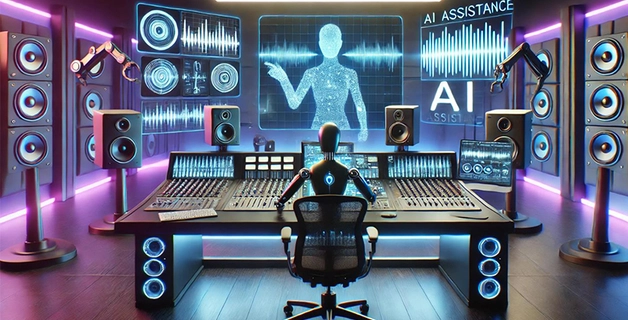
There was a moment—not long ago—when AI music felt like a cheat code. Type a prompt, hit generate, and suddenly you’ve got a song that sounds like it took a Nashville session crew three days and a bottle of bourbon to produce.
Now comes reality.
The United States Supreme Court just declined to hear the appeal in the case involving Stephen Thaler, effectively backing the U.S. Copyright Office’s position: fully AI-generated works cannot be copyrighted because they lack human authorship.
And just like that, the entire “AI music empire overnight” business model hit a speed bump the size of Texas.
The Ruling That Changed the Tune

Let’s simplify what just happened:
- The U.S. Copyright Office said:
👉 No human = no copyright - Thaler challenged it
- The courts agreed with the government
- The Supreme Court said: “We’re not even taking this case”
Translation:
This is now the law of the land.
If a song is generated entirely by AI, you do not own it in the traditional sense.
So… Can You Still Make Money with AI Music?
Short answer: Yes—but not the way people thought.
The “Business Model Fantasy” (What People Hoped For)
- Pump out thousands of AI songs
- Upload to Spotify/YouTube
- Collect passive income forever
- Retire by Tuesday
The Reality Check
- No copyright = weak ownership
- Anyone can potentially reuse or remix similar outputs
- Platforms may limit monetization or prioritize human-created content
- Licensing becomes… messy
In other words:
You can still make money—but you don’t fully control the asset.
Where AI Music STILL Works (And Works Well)

Here’s where things get interesting—and actually profitable:
1. Content Creation (Huge Opportunity)
- YouTube background music
- Podcasts
- Social media clips
- News segments
AI music is fast, cheap, and “good enough.”
That’s a winning combo.
2. Hybrid Music (The Smart Play)
If you:
- Write lyrics
- Arrange structure
- Edit and refine output
👉 Now you’ve introduced human authorship
That means:
- You can claim copyright (on your contribution)
- You can build a brand
- You can license your work
This is where serious creators are heading.
3. Advertising & Sync Licensing
Businesses don’t always care about artistic purity.
They want:
- Cheap
- Fast
- Custom
AI delivers all three.
But here’s the catch:
Without clear ownership, big brands may hesitate unless there’s human input involved.
The Grey Area (Where Things Get Spicy)
This ruling didn’t kill AI music—it just made things… complicated.
Questions that still don’t have clean answers:
- How much human input is “enough” for copyright?
- If you tweak AI output, who owns what?
- What happens when AI models are trained on copyrighted music?
That last one?
Yeah… that’s the lawsuit factory of the next decade.
So… Is the Juice Worth the Squeeze?
If You Want Easy Passive Income:
❌ Probably not
That gold rush fantasy just got regulated into reality.
If You Want to Build Something Real:
✅ Absolutely
But the strategy changed:
- Use AI as a tool, not the creator
- Add human creativity (lyrics, editing, structure)
- Build a brand, not a song farm
- Focus on utility (content, ads, media)
Bottom Line
AI music isn’t dead.
It just grew up.
The days of pressing a button and owning a hit song are over. But for creators who actually create—who guide, shape, and refine—this might be the most powerful tool the music industry has ever seen.
So yeah… the juice?
Still there.
But now you actually have to squeeze it.
About the Author